The head coach of Fiji U17: Most of our players have played less than 10 games this year
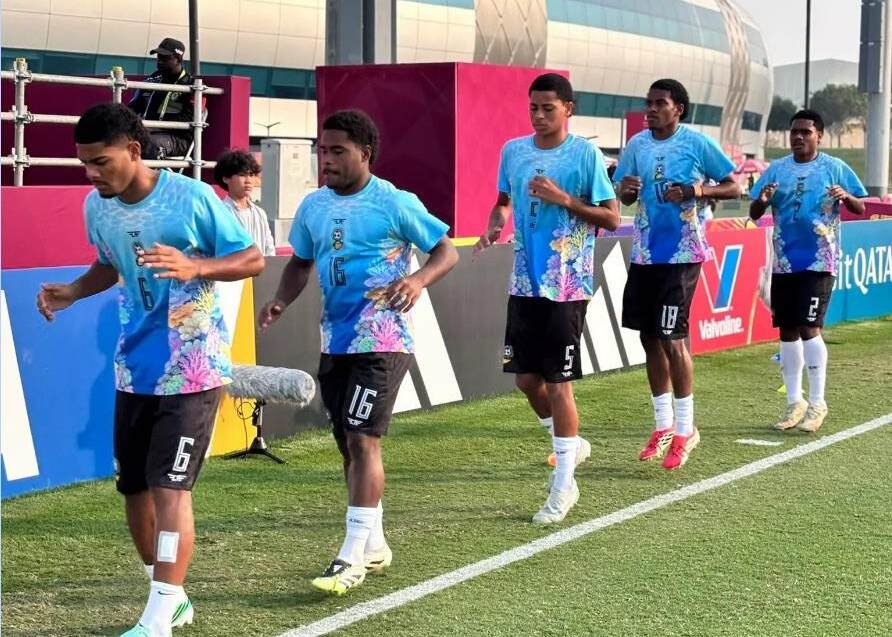
According to the official website of the Fiji Football Association, although the performance of the Fiji U17 team in the 2026 U17 World Cup was not satisfactory, the team's head coach, Ofre, still believes that this valuable participation experience will be a key opportunity to reshape the next generation of Fiji football.
Ofrey said in an interview that the loss in this U17 World Cup clearly exposed the huge gap between Fijian football and the world's top level. He believes that for Fijian football to rise, it must focus on two core aspects: professional youth training starting from the age of 5 to 6, and regular high-level competitions throughout the growth period.
He emphasized that this is a long-term project lasting for ten years and the process is bound to be full of hardships. As the head coach, I could have chosen to stand by and watch, but I chose to throw myself into it because I am well aware that if we don't address the root causes, the path of Fijian football will always be difficult to move forward.
In the group stage, Fiji lost to Morocco 0-6 and Spain 0-15 respectively. In the face of external doubts, O 'Frey remained very rational. We are up against African champions and world champions. Many players in the opposing team have long been playing for the world's top clubs and have even signed professional contracts. There is an inevitable logic behind this result. If we don't admit this, it would be self-deception.
He further pointed out that the gap is not only reflected in the technical aspects but also in the accumulation of competition experience: "The players of the Spanish team start professional training from the age of four or five, and they participate in as many as 30 to 40 high-level competitions each year, with the season lasting for 10 months." In contrast, most of our players have played less than 10 games since the beginning of 2026, and none of them have been high-level confrontations. "Only Mika Do, who plays in the professional league, can keep up with the pace in the entire team. That's the gap."
In addition to technology and experience, Ofrey also mentioned the unique cultural challenge of Fiji - the brain drain. In Fiji, teenagers with the best physical fitness often choose rugby as their first choice, which puts football at a disadvantage in terms of athletic ability and physical confrontation.
Besides, this is not a predicament for Fiji alone. Ofre pointed out that the entire Oceania region is experiencing growing pains: "New Caledonia suffered a 0-16 defeat last year. Even the strongest team in the region, New Zealand, has struggled to secure a win on the World Cup stage." This is a common issue that all football in Oceania needs to confront."
Ofre was entrusted with the mission at a critical moment this time. He took over the team just one week after the resignation of the original U17 head coach. He said that the Fiji Football Association has recognized the problem and has begun to narrow the gap by joining the "FIFA Talent Development Program", participating in the Oceania Professional League and building a brand-new high-performance training center.