DO: Despite Manchester United's poor performance, they still have appeal in the transfer market
TA's renowned transfer journalist David Ornstein answered a series of questions raised by fans on the "Athletic Football" podcast. He believes that Manchester United will sign a defender in the winter transfer window. Although Manchester United is now Mired in the relegation zone, they still have appeal in the transfer market. Besides, he also talked about Chelsea and Tottenham.
Question 1: What makes Manchester United believe they can clean up the current mess in the January transfer window?
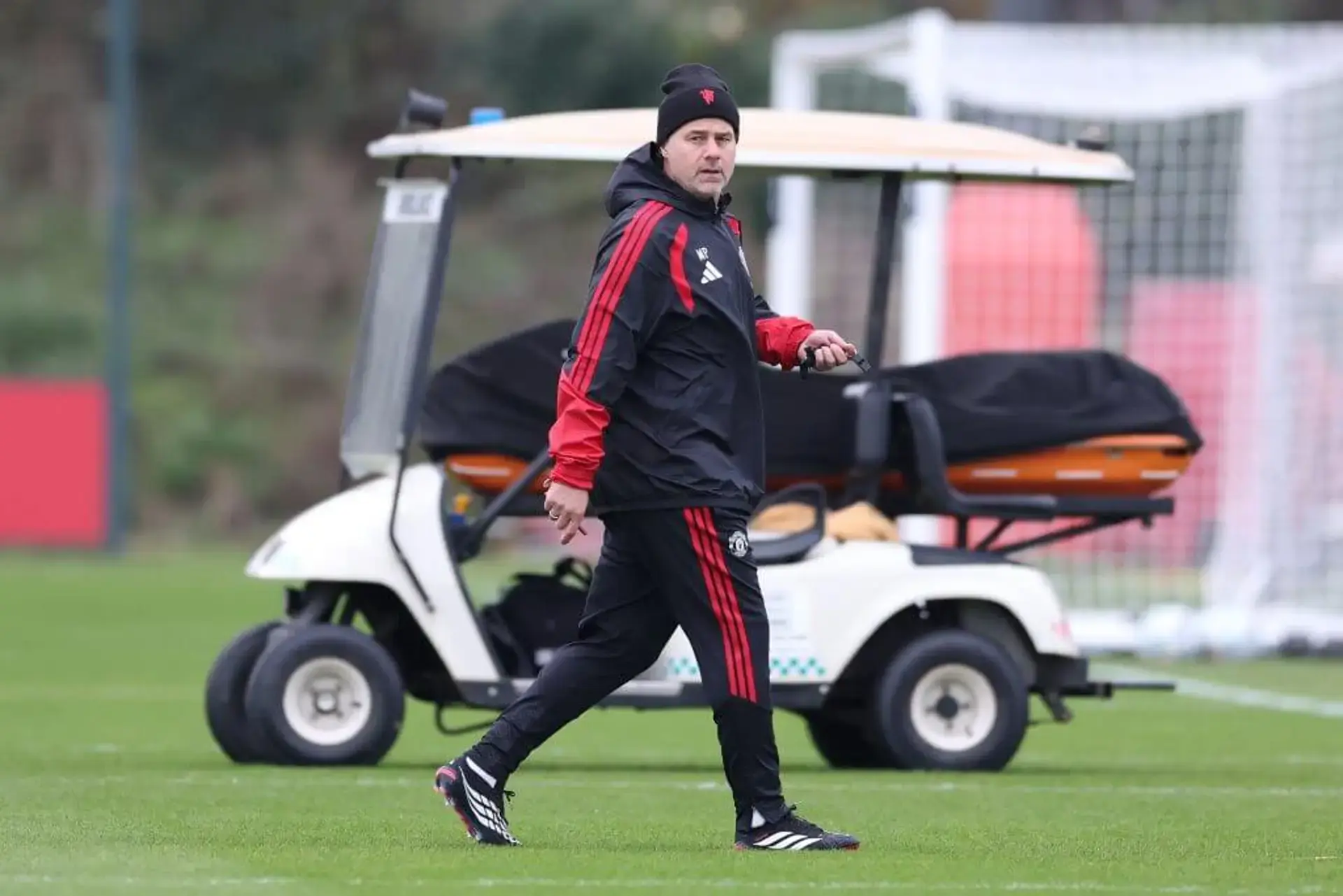
It is highly likely that Manchester United will carry out some transfer operations in January. Judging from the situation, it is indeed necessary for them to do so, but the matter is not set in stone. No matter which club Pochettino takes over, he will first assess the current available squad at his disposal.
As far as I know, he and Jesus Perez will take over the team from a fresh perspective, without preconceived notions, and make judgments based on the actual situation in various aspects such as the performance on the field, the situation in the dressing room, and communication and conversation. The current batch of players' strength is better than what they have shown on the field, but Pochettino and Perez will form a very clear judgment.
Just as he saw during his stints at Tottenham and Southampton, this head coach prefers young players. As long as he feels that there are players worthy of being given a chance, regardless of the outcome, he will give them full play. This is both his strength and his weakness. He is determined to prove that he can train these players to a higher level and will not suppress their growth path.
Next, let's talk about the issue of the transfer market. Manchester United is in a precarious situation and has reached a critical juncture. They must be prepared to take action and they also have the financial conditions to operate.
A report in The Daily Mail stated that Manchester United's January transfer budget is 50 million pounds (equivalent to 66 million US dollars). This sum of money can't do much when used to directly buy out players, but if a suitable opportunity arises, the club may try loan deals and some emergency signings. The current candidate being sought out will not be on the same level as the ideal transfer target for the summer window.
In my opinion, the team will strengthen its defense line: judging from all the current signs, this is not a very hard direction to think of. The information I got before indicated that strengthening the defense might be the top priority, and there have also been other related reports outside. Manchester United will not blindly sign new players just for the sake of it. We also expressed a similar view when discussing the left-back position this summer. If the team's performance improves, no one wants the possibility of signing new players in the summer transfer window to be ruined due to the wrong operation in the January transfer.
There is also the issue of players' willingness to join. From what I have learned, there is no doubt that Manchester United still has appeal. Given the current situation of the team, the players will of course weigh things carefully, and it seems that the team is deeply Mired in a relegation battle. But I don't think Manchester United will encounter any difficulties in recruiting players.
Everyone I have come into contact with has said that Pochettino is not the kind of coach who specifically wants to sign certain players. He is clear about which positions the team needs to strengthen, and the specific recruitment work is left to his team to implement. The club will seriously consider signing new players in the future to help the team get out of the current predicament. A series of crucial consultations will take place in the coming weeks to determine the directions the team needs to strengthen, target players, available players, and whether the budget is sufficient.
Question 2: One year after Levy's departure, does the outside world think Tottenham has changed or become more professional in dealing with people?
This kind of problem is specifically designed to get me into trouble! The phrase "more professional" is unfair and disrespectful to both the old and new sides. The club is indeed different now. After all, it was Levy who was in charge of all the affairs before. For a long time, he was at the core of everything both on and off the field, so his departure brought a huge shock.
Obviously, the Lewis Family Trust hopes to adopt a different development approach. Levi has endured a lot of criticism. I believe he has also made many contributions. Many things were not entirely his responsibility, but Tottenham did miss out on quite a few transfer deals that they originally wanted to finalize back then.
The high salaries offered by Tottenham in the past could not compete with those of top clubs. The club's wage income ratio is controlled extremely well, even to an excessive extent. The new management has already made changes in this regard: now the club is willing to pay higher salaries and also willing to invest higher transfer fees, and its actions in the transfer market seem more decisive.
This is also reflected in the compensation of the head coach. When De Zerbi took office, his salary was among the top tier of Premier League managers, and there was no clause in his contract that allowed him to be released if the team was relegated. The working styles of the old and new management teams are simply worlds apart. I'm not biased towards either side. Looking back at Tottenham's qualification for European competitions during Levy's tenure, compared to before he took over and many other teams in the Premier League, the results were actually quite impressive. Moreover, the team finally broke their championship drought and won the trophy.
It's too early to start celebrating and praising the new management team now. The team has shown some signs of recovery, with positive signals both on and off the field. However, the subsequent trend remains to be seen. On this matter, I will adopt my own signature neutral stance, even if it doesn't please either side, because both the old and new management models have their advantages and disadvantages. How it will develop in the future remains to be seen. You should know that during Levi's era, there were also many capable people in the team, despite the fact that they endured a lot of criticism.
Negotiating with Levy is by no means an easy task. The parties sitting opposite the negotiating table - club owners, executives, players and agents - sometimes are simply suffering and in great pain. But from Tottenham's perspective, this style is sometimes indeed beneficial to the club, and sometimes not.
We should not draw a conclusion too early on their recruitment operations so far. Perhaps these signings will be regarded as cost-effective deals in the future; It is also possible that a few of them will be evaluated as Tottenham's bids being too high. I'll reserve my opinion for now, but this issue itself is quite worth discussing.
Question 3: Chelsea's attempts at transfer reform have failed. What changes does the club need to make in order to change course?
This question is very interesting. I think the expression "failure" is rather subjective. This experience was undoubtedly full of twists and turns. Although a lot has happened, for this current boss team that has undergone a change, the time is actually still too early. Berley took over as the club's president as a representative figure and is now about to step down. Berley originally had no relevant experience in the football industry. They were still in the stage of learning and exploring.
Chelsea's model itself is unique. I won't comment on which is better or worse, but just take a look at those successful teams: for instance, the defending champion Arsenal, where Belta is already very experienced in handling matters like transfer operations. He worked alone with Arteta, supplemented by the CEO and other personnel, and the division of responsibilities was very clear.
Let's take a look at Manchester City. There was a period when Belada was mainly responsible for data accounting and contract affairs by his side. After Belada left, it was replaced by Molson, who later moved to Tottenham. Now Viana has joined Manchester City. Just like Arsenal, Manchester City's management hierarchy is clear at a glance.
During Liverpool's rise, it was Edwards who worked in tandem with Klopp. Although there are other core personnel, they all belong to the roles of assistants or deputies. At the level of the football business structure, it is clear who is in charge of Liverpool. Now taking over is Ward. He has been working at the club for a long time and is highly experienced. He has already proven himself with achievements in the transfer market. He is not exactly the sports director in name, but he is highly regarded in the industry. Most other successful clubs follow a similar model. Chelsea, however, adopts a different model, and the outside world will judge them based on this.
Besides, the head coach of Chelsea is still growing and learning. Interestingly, the club has great trust in Alonso. He once achieved success at Bayer Leverkusen but suffered a defeat at Real Madrid. Alonso enjoys an extremely high reputation in the industry, but now almost the entire team is exploring and moving forward together.
This statement is likely to be refuted in the future, but the club regards the current combination as a true cooperative model. Compared with some of the previous managers who, for various reasons, had difficulty working in coordination with the owner and the sports management system at that time, Chelsea believes that Alonso is willing and able to work within this system. However, I don't think the overall architecture will undergo major changes; only minor adjustments will be made to some parts. Therefore, no matter how much fans and commentators disapprove, Chelsea's future development path is already quite clear.
(End
In addition, DO also talked about Glasner in the program. He said that even if Nottingham Forest's performance was poor, Glasner would not be dismissed in the short term.