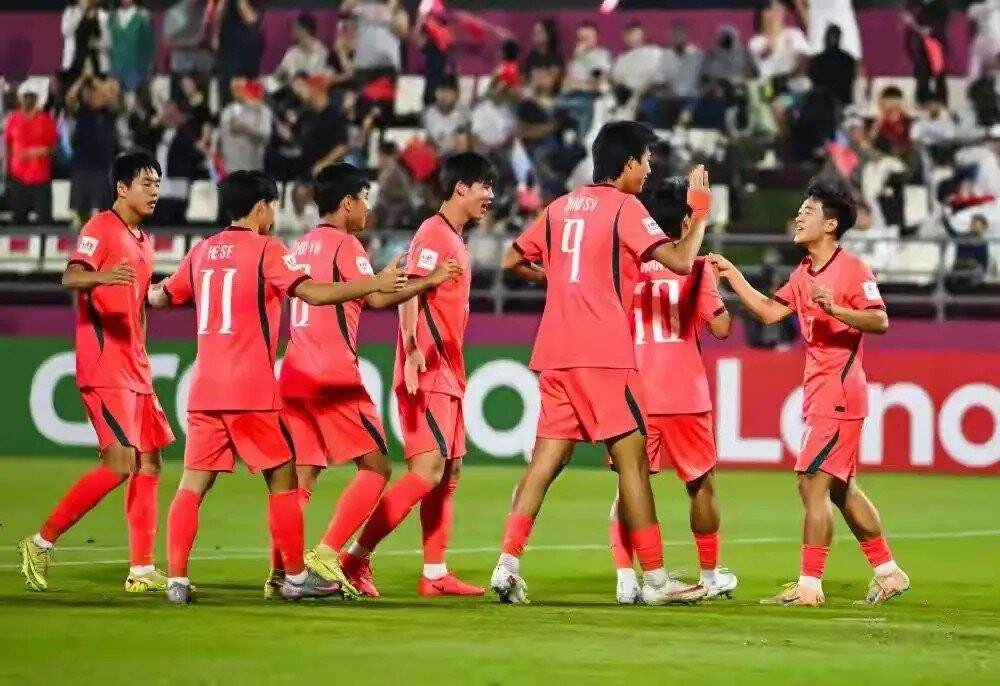
There are only two groups left in the World Youth Championship group stage that have not been completed. It is highly likely that the national youth team will play against Brazil or Serbia in the knockout stage
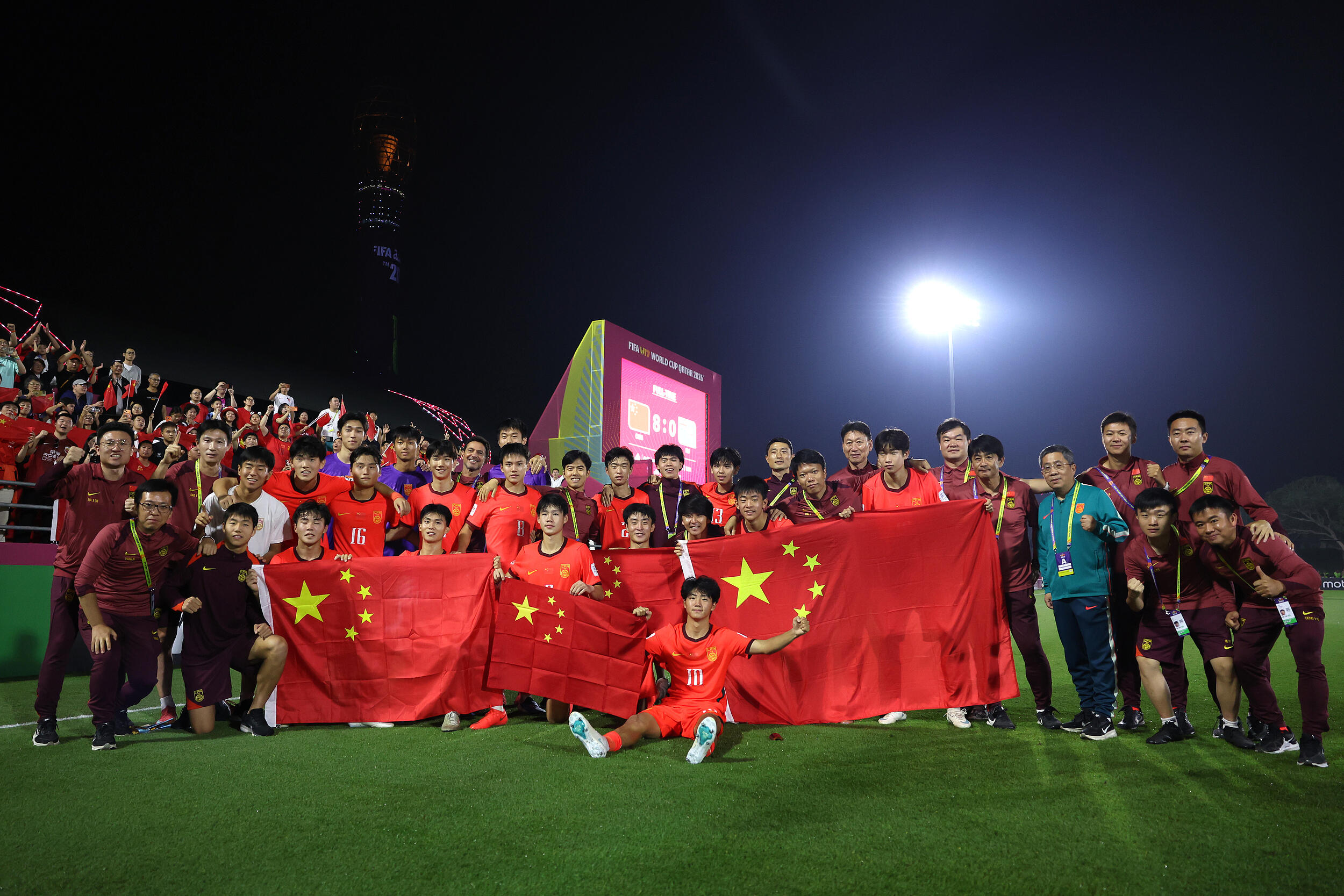
The last round of Group I of the U17 Men's World Cup concluded. Brazil topped the group with 9 points and advanced, while Tanzania, the third-place team with 2 points, failed to qualify. In this way, the Japanese U17 team has been confirmed to rank among the eight best third-place teams in each group, thus ensuring their advancement to the knockout stage. The first-round opponent of the Chinese U17 national football team in the knockout stage is basically determined to be one of Brazil, Serbia and Venezuela, and it is highly likely to be one of Brazil and Serbia.
After the conclusion of Group I's matches, only the final rounds of Group J and Group K have not yet ended. Among the current third-place teams in each group, the Japanese team, which won 7-0 against Honduras in the last round, has 3 points and a goal difference of +5, temporarily ranking sixth. As only the third-place teams in Group J and Group K have a chance to surpass Japan in terms of performance, the Japanese U17 team has already been confirmed as one of the eight best third-place teams in each group, thus advancing to the knockout stage.
At present, the national youth team is still ranked second in the third-place rankings of each group. Only the third-place result in Group J is likely to be achieved by the national youth team, but the probability is relatively high. (Only when Montenegro won big against Chile and Algeria drew with the Dominican Republic, Montenegro and Algeria both have 4 points. Montenegro ranks third due to its status advantage. At this time, Montenegro needs a goal difference higher than the +3 of the national youth team.) Only in this way can the third-place team of the national youth group be pushed to the third place.
According to the knockout stage pairing rules announced by FIFA, the eight third-place teams advancing from each group will be paired in reverse order with the top eight first-place teams based on their group stage results. That is, the best-performing third-place team will play against the eighth-best first-place team, the second-best third-place team will play against the seventh-best first-place team, and so on.
If the national youth team is determined to rank second among the third-place teams in each group, they will have to face the first-place team with the seventh-best record in the knockout stage.
Currently, the seventh-best team in the group is Serbia, while Brazil is temporarily ranked sixth.
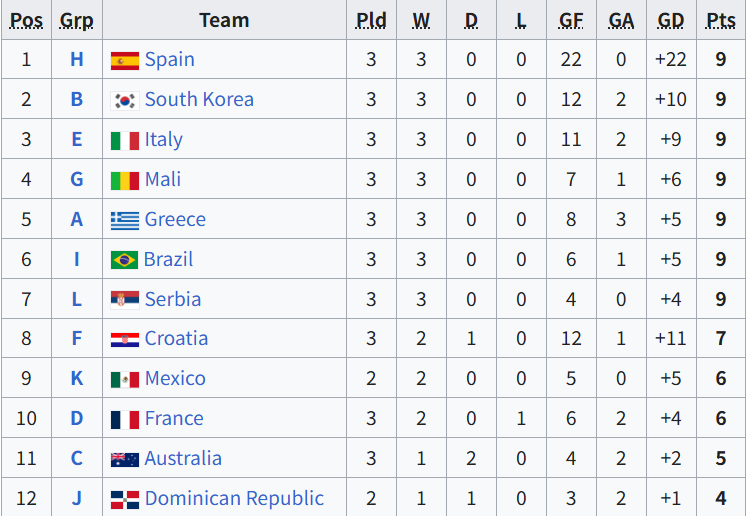
Among the two groups that have not yet completed their matches, the first-place team in Group J has at most 7 points and is certain to be unable to move up to seventh place in the group's top ranking. Only the top team in Group K (Mexico or Venezuela, both teams have 6 points and will meet directly in the final round) still has a chance to cause a change in the team that belongs to the seventh place.
Moreover, as Mexico's current goal difference is +5, Venezuela's is +2, Serbia, currently in 7th place, has a goal difference of +4, and Brazil, currently in 6th place, has a goal difference of +5, if Mexico sects the top spot in the group, it will make Brazil the seventh-best group winner. If Venezuela finishes first in the group, it will be determined which of the three teams, Venezuela, Serbia and Brazil, is the seventh best group winner based on their goal difference.
In conclusion, if the national youth team is confirmed to rank second among the third-place teams in each group, they will face one of the three teams in the knockout stage: Serbia, Brazil, or Venezuela.